
Beaumont, TX & Southeast Texas
Slab Leak Detection & Repair in Beaumont, TX
Porter's Plumbing Solutions detects and repairs slab leaks in Beaumont, TX, including under-slab tunneling access for Spindletop-era and newer homes.
Slab Leak Detection & Repair Services in Beaumont, TX
Beaumont sits on Gulf Coast clay that swells after rain off the Neches watershed and pulls back tight through a dry stretch, and a slab foundation moves with it every time. That constant, small motion is what eventually cracks or splits the copper or galvanized line running under the concrete, and it doesn't happen on a schedule. A home near downtown built during the Spindletop oil boom and a house built decades later on the edge of the city limits both sit on the same moving clay, they just fail in different ways and at different ages. Porter's Plumbing Solutions has served Beaumont since 2022, and the TSBPE-licensed master plumbers on our crew bring 25 years in the trade to slab leak calls across Jefferson County and the wider Golden Triangle. We locate the leak with equipment before anyone opens the slab, and depending on the property we can access the line by breaking a targeted section of concrete or by tunneling underneath it entirely, an approach we've used on a number of Beaumont jobs where protecting the flooring above mattered more than speed.
Why a Spindletop-Era Copper Line Fails Differently Than a 1990s PEX Run
Homes built in Beaumont's oldest neighborhoods, the ones that trace back to the Spindletop boom and the decades of growth that followed, were plumbed with copper or, in a lot of cases, galvanized steel set into the slab when the foundation was poured. Copper in that era corrodes slowly from mineral-heavy soil chemistry and from stress at soldered joints as the clay shifts underneath it, so a leak often shows up as a slow pressure decline over months before anyone notices a wet spot. A newer Beaumont home built with PEX supply lines behaves differently. PEX resists corrosion, so when a slab leak happens in a newer house it's almost always mechanical, a fitting under stress or a line that got kinked or damaged during the original pour, and it tends to show up faster and more suddenly than an old copper line's slow decline.
Pressure Drop, Warm Floor Spots, or Both: Reading the Signal Correctly
A hot water line leak under a slab almost always announces itself with a warm patch on the floor, sometimes noticeable in bare feet before it shows up any other way. A cold water line leak doesn't give you that clue, so it usually shows up first as a drop in water pressure at the fixtures, a water bill that climbs without an obvious cause, or the sound of running water somewhere in the house with every fixture turned off. Homeowners who only check for a warm spot can miss a cold line leak for weeks. We ask about all three signs on every Beaumont slab leak call, not just the one that's easiest to notice.
Tunneling Under the Slab Instead of Breaking Through It
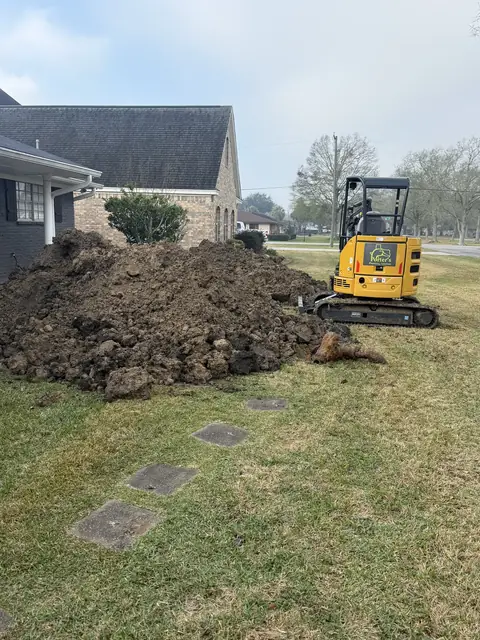
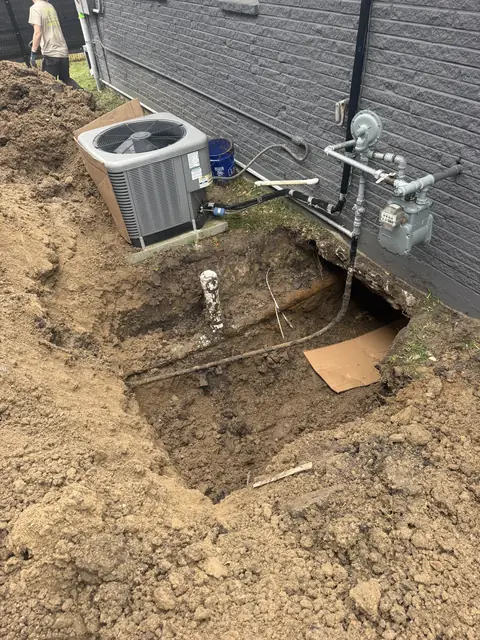
Cutting a section of concrete over the leak is the standard access method, and it's usually the right call for a single, well-located leak. On some Beaumont properties, especially where flooring is tile or hardwood a homeowner doesn't want cut, or where the leak sits under a load-bearing interior wall, we tunnel under the slab from an exterior access point instead. It takes longer than a straight cut, but it avoids opening the floor at all. We've used this approach on a number of jobs across the Golden Triangle, and it's worth asking about before assuming the floor has to come up.
Hot Line Leaks Detect Differently Than Cold Line Leaks
Detection equipment reads a hot line leak and a cold line leak differently, which is part of why we don't run the same test on every call. Thermal imaging picks up the heat signature of a leaking hot water line moving through the slab and surrounding soil, narrowing the search area before anyone opens anything. A cold line leak doesn't leave a heat signature, so we lean on acoustic listening equipment and pressure isolation instead, tracking the sound of water escaping under pressure through the concrete. Getting this distinction right up front is what keeps a Beaumont slab leak call from turning into an exploratory cut.
Spot Repair, Reroute, or Repipe: The Decision on a Beaumont Job
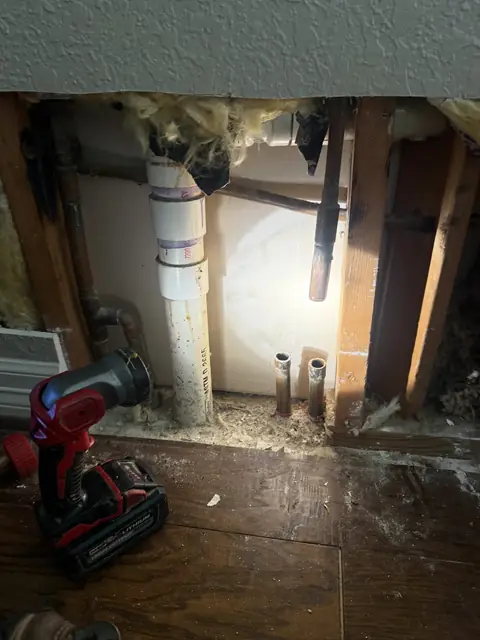
A single, isolated leak in a line that's otherwise sound gets a spot repair: access the pipe, cut out the damaged section, rejoin it, patch the slab. A Beaumont home with a second or third leak in the same run of old galvanized pipe is telling us the whole line is failing, not just the spot that gave out first, and that's usually when we recommend rerouting the line overhead through the attic or planning a fuller repipe. Which option makes sense depends on the pipe material, the home's age, and whether the rest of the system is holding up, and we'll say plainly which situation a homeowner is in rather than defaulting to the smallest visible fix.

Need Slab Leak Detection & Repair in Beaumont?
Get a free estimate. Call (409) 217-9371 or request a quote online.
Other Services in Beaumont, TX
Slab Leak Detection & Repair Near Beaumont
Recent Slab Leak Detection & Repair Work
Jobs from across our Southeast Texas service area.
Explore Related Services
Slab Leak Detection & Repair FAQ — Beaumont
Does a slab leak always show up as a warm spot on the floor?
Can you access a slab leak without cutting through my floor?
Why does a hot water line leak show up faster than a cold water line leak?
Is a slab leak in an older Beaumont home connected to the foundation itself?
How does Porter's decide between a spot repair and rerouting the line?
Dwayne Porter, Owner
Porter's Plumbing Solutions · Est. 2022
Updated October 2026
Ready to Get Started?
Get a free, no-obligation estimate for your project.