Beaumont, TX & Southeast Texas
Under-Slab Tunneling in Beaumont, TX
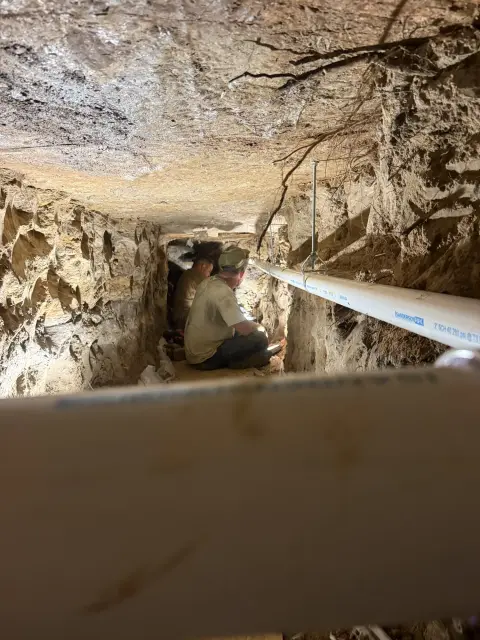
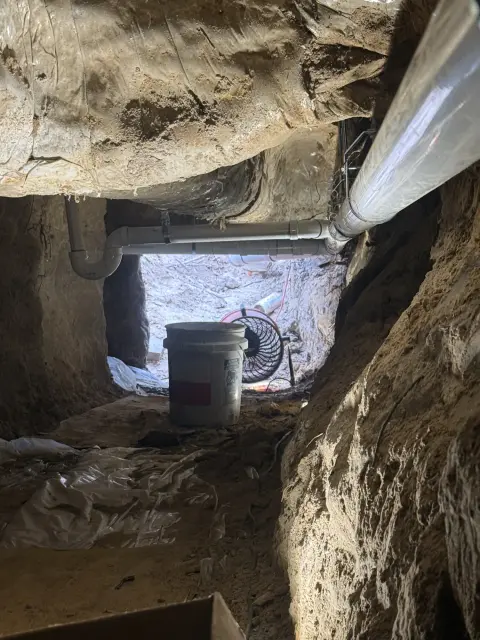
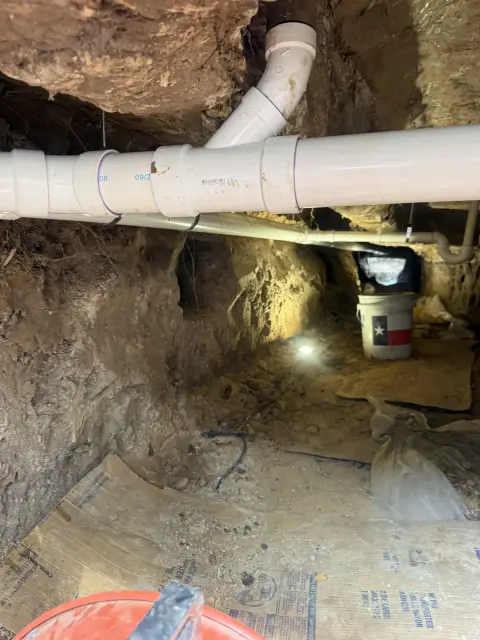
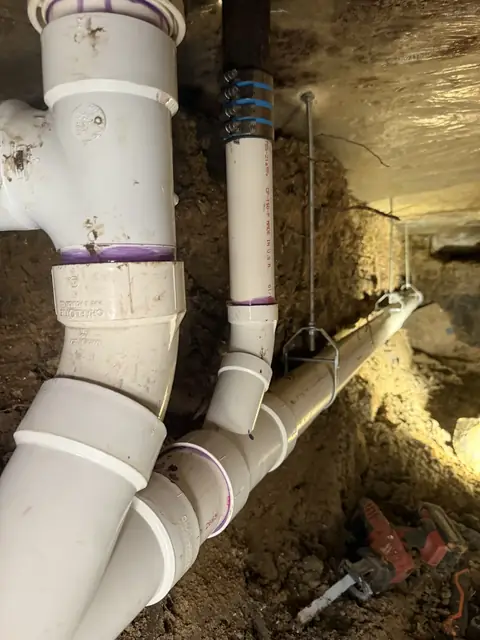
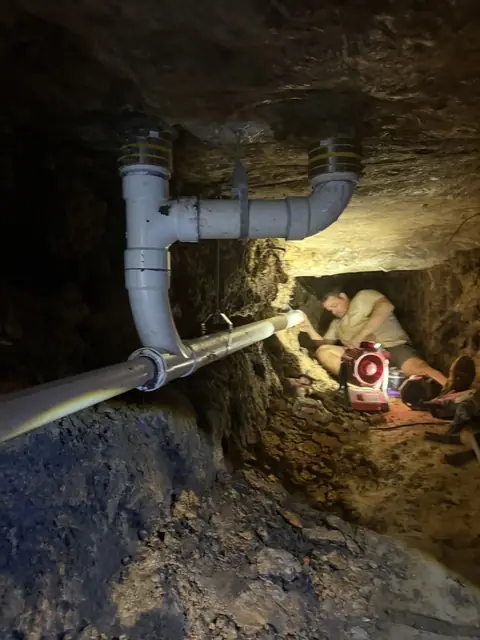
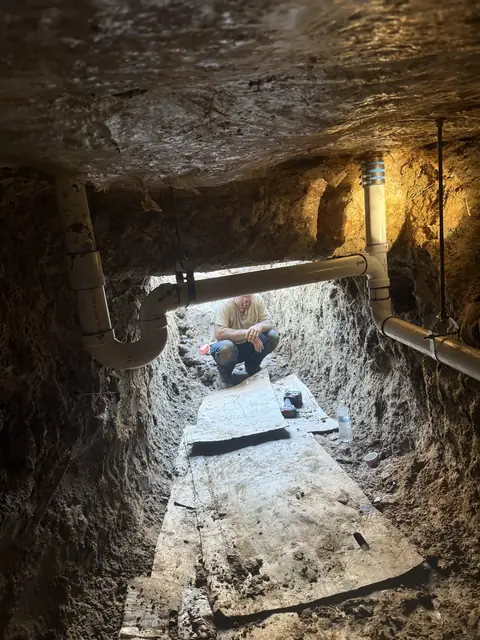
A supply or drain line that fails under the slab doesn't always mean cutting through the finished floor to reach it. When the access point makes more sense from outside the house, a plumber can hand-dig a tunnel under the foundation instead, working from the exterior in to the section of pipe that needs repair. The tunnel starts outside the footprint of the slab, usually from a pit dug along the perimeter, and is dug by hand back underneath the house. It's sized for someone to actually work in, not a bore just wide enough for a pipe, and shored with bracing wherever the soil or the depth calls for it. Porter's master plumbers, licensed under TSBPE and carrying 25 years in the trade combined, have run this work across the Golden Triangle, from Jefferson County into Orange County and Hardin County, and it comes up often enough here that it's become a real part of the job. Southeast Texas is why. Slab-on-grade construction is the regional standard, and the Gulf Coast clay most of this region sits on expands when it's wet and shrinks when it dries, which stresses pipe embedded in or running under a foundation. When that pipe fails, the homeowner is left choosing between opening the slab from inside the house or reaching it from outside through a tunnel. Tunneling keeps finished floors, tile, and built-in cabinets untouched, and in most cases the family can stay in the house while the crew works, since the repair never happens inside the living space at all. The trade-off is time and labor. A hand-dug tunnel takes longer to open than a slab cut does, and the ground has to go back exactly the way it came out once the pipe is repaired. That last part, more than anything about the digging itself, is what separates a tunnel job that holds up from one that causes problems years later.
By the Numbers
Under-Slab Tunneling You Can Count On
A supply or drain line that fails under the slab doesn't always mean cutting through the finished floor to reach it. When the access point makes more sense from outside the house, a plumber can hand-dig a tunnel under the foundation instead, working from the exterior in to the section of pipe that needs repair. The tunnel starts outside the footprint of the slab, usually from a pit dug along the perimeter, and is dug by hand back underneath the house. It's sized for someone to actually work in, not a bore just wide enough for a pipe, and shored with bracing wherever the soil or the depth calls for it. Porter's master plumbers, licensed under TSBPE and carrying 25 years in the trade combined, have run this work across the Golden Triangle, from Jefferson County into Orange County and Hardin County, and it comes up often enough here that it's become a real part of the job. Southeast Texas is why. Slab-on-grade construction is the regional standard, and the Gulf Coast clay most of this region sits on expands when it's wet and shrinks when it dries, which stresses pipe embedded in or running under a foundation. When that pipe fails, the homeowner is left choosing between opening the slab from inside the house or reaching it from outside through a tunnel. Tunneling keeps finished floors, tile, and built-in cabinets untouched, and in most cases the family can stay in the house while the crew works, since the repair never happens inside the living space at all. The trade-off is time and labor. A hand-dug tunnel takes longer to open than a slab cut does, and the ground has to go back exactly the way it came out once the pipe is repaired. That last part, more than anything about the digging itself, is what separates a tunnel job that holds up from one that causes problems years later.
How a Tunnel Under a Golden Triangle Slab Actually Gets Dug
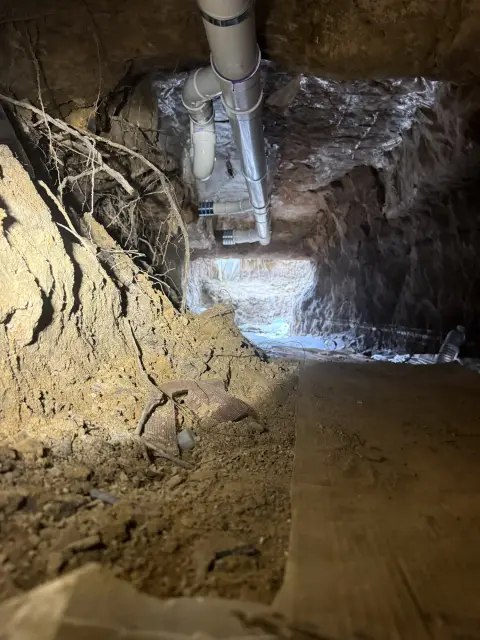
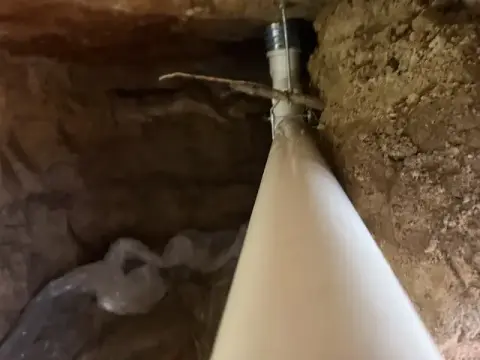
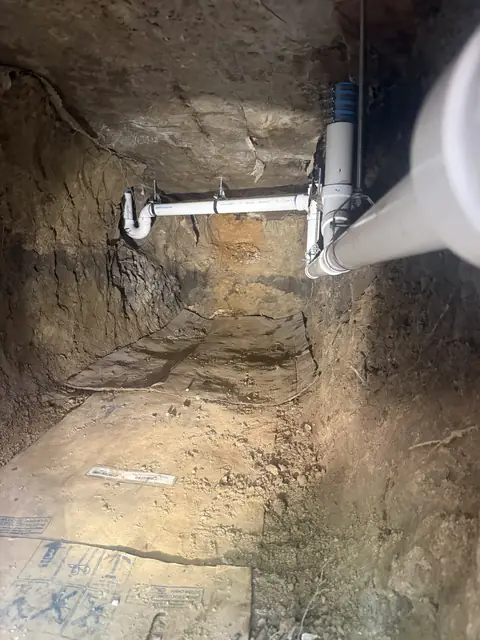
Tunneling starts with an access pit dug just outside the foundation, at grade, close to where the tunnel needs to head. From there the crew digs by hand, moving toward the section of pipe identified beforehand by leak detection or camera work, and the passage stays wide and tall enough for a person to actually kneel and work in, not a bore just big enough for a pipe to pass through. Depending on depth and how the soil is holding together that day, especially in the clay-heavy ground common along the Neches watershed through Jefferson County and Hardin County, the crew shores the tunnel walls and ceiling with bracing as they go. Spoil comes out through the same pit it went in through. None of it happens inside the house.
Tunnel or Slab Break: A Real Trade-off, Not a Default Answer
Tunneling isn't automatically the right call just because a slab leak shows up. When the affected pipe run sits under finished flooring, tile, or built-in cabinetry, or when the family wants to keep living in the house without a section of floor torn out, tunneling usually wins. When the leak sits under an unfinished area like a garage slab, or the access distance from an exterior wall is short, a straight slab cut can be faster and less disruptive than tunneling a long run to reach the same spot. We look at where the leak is, how far it is from a usable exterior access point, and what's sitting on top of the slab before recommending either one.
Why Gulf Coast Clay Makes Tunneling a Regular Call Here
Most homes across the Golden Triangle sit on slab-on-grade foundations poured directly over Gulf Coast clay, soil that swells when it's saturated and shrinks hard when it dries out. That movement stresses pipe embedded under the slab, particularly in older homes built during the Spindletop oil-boom years and the decades after, and it's a big part of why slab-related repairs come up as often as they do here. Reaching that pipe without disturbing a foundation already working against the soil beneath it is exactly what tunneling is for.
What Tunneling Protects Inside the House
The obvious answer is the floor itself, tile, hardwood, finished concrete, whatever's down, along with any cabinetry or built-ins anchored to the slab above the repair. The less obvious answer is the foundation. Every cut into a slab is an intrusion into a structural element, and minimizing how much of it gets opened matters more in a region where the foundation is already working against expansive clay. Staying out of the slab entirely, and working instead from outside the footprint of the house, keeps that structural element as intact as it was before the pipe failed.
Backfill and Compaction: Why Some Tunnel Jobs Hold and Others Don't
Once the repair is done, the tunnel has to be filled back in, and this is where a tunnel job is actually won or lost. Backfilling with loose soil and calling it finished leaves a void that settles over months as rain works through it, and a settling void under a slab can lead to the same kind of foundation movement the original leak was caused by, sometimes worse. The right way is backfilling in compacted lifts, packing each layer before adding the next, so the soil under the slab ends up as dense as it was before anyone dug into it. That difference, more than the digging itself, is what separates a repair that holds up for years from one that quietly creates a foundation problem down the road. It's also why tunneling isn't the right call when the soil is saturated from recent heavy rain or sits with a high water table. Compacting wet clay properly is difficult, and a crew that tunnels through it anyway just sets up the same settling problem the backfill step is supposed to prevent.
Why Choose Porter's Plumbing Solutions?
- ✓Licensed, code-compliant plumbing on every job
- ✓Right tools and parts for the job, every time
- ✓Clean, professional plumbers who respect your property
- ✓Detailed written estimates with no hidden fees
- ✓Licensed, insured, and locally owned since 2022

Get a Free Under-Slab Tunneling Estimate
Call (409) 217-9371 or fill out our form for a no-obligation quote.
Under-Slab Tunneling Service Areas
We provide under-slab tunneling services within 50 miles of Beaumont, including:
Related Services
Burst & Frozen Pipe Repair
Emergency repair for burst and freeze-damaged pipes
Faucet, Fixture & Toilet Repair
Repair leaking faucets, running toilets, and worn fixtures
Garbage Disposal Repair & Installation
Fix or replace jammed, leaking, and dead garbage disposals
Gas Line Leak Detection & Repair
Licensed gas leak detection, testing, and repair
Under-Slab Tunneling We've Done
Under-Slab Tunneling FAQ
Is tunneling the same thing as digging a trench under my house?
How do you decide between tunneling and cutting the slab?
Will tunneling damage my foundation?
Can I stay in my house while a tunnel job is done?
What happens to the tunnel once the pipe is fixed?
Dwayne Porter, Owner
Porter's Plumbing Solutions · Est. 2022
Updated October 2026
Ready to Get Started?
Get a free, no-obligation estimate for your project.